Where It Is Used
- Gushing cracks and defects in tunnels, metro linings, underground garages and basements;
- Structural consolidation of weak, fractured and water-bearing strata ahead of lining works;
- Filling of large voids, honeycombed zones, abandoned formwork tie holes and conduits;
- Sealing around pipe penetrations, embedded parts and joint intersections;
- Emergency sealing where ordinary grouts cannot withstand the water flow or pressure.
Performance Characteristics
The grout develops high strength quickly, so a stopped leak is also structurally restored rather than simply capped. Its controlled setting behavior allows the pumpable liquid to penetrate cracks and connected pores before hardening, while the hardened grout resists washout, water pressure and long-term immersion. It may be formulated for either rapid plugging against flowing water or slower, deeper penetration for consolidation.
Like our AS grout, the high-strength specialty grout is compatible with dual-component pumping and can be combined with epoxy resins, polyurethane and acrylate systems in mixed repair schemes, allowing each material to perform the role suited to its properties.
Engineering Practice
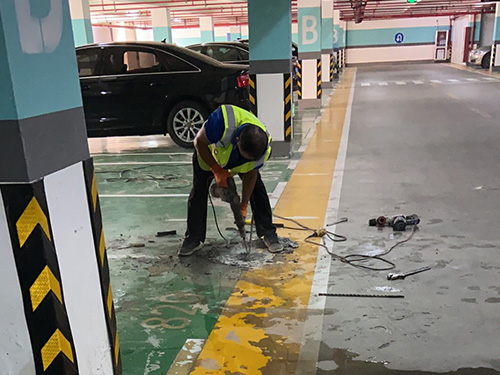
Typical projects use the grout as the first-line material for active leaks and structural strengthening: injection holes are drilled to intersect the water path, the grout is pumped until refusal, and the surface is finished after pressure acceptance. Where defects are extensive, the grout is zoned and injected in sequence so each section is fully consolidated before the next begins.
Handling and Safety
Material quantities should be matched to the working time of each batch, and pumps and lines flushed promptly after use. Operators wear gloves and eye protection during injection and avoid skin contact with the fresh grout. Detailed mixing ratios and pump settings are provided with the product and adjusted to site temperature and water pressure.