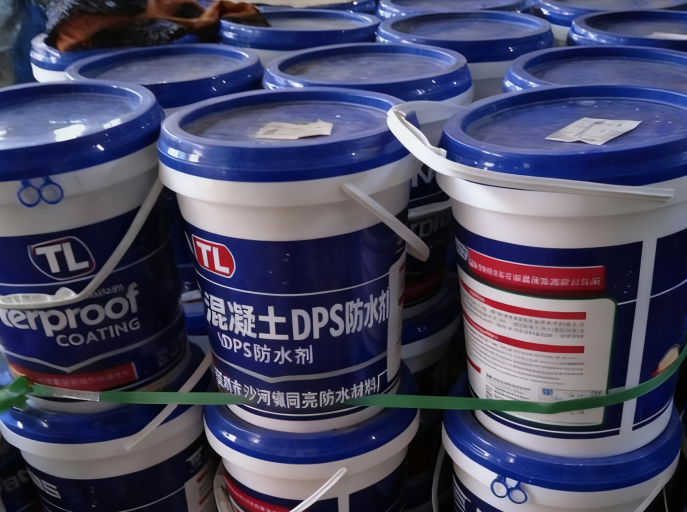
How DPS Works
DPS differs from any conventional waterproofing material on the market. It is a high-technology, non-toxic activated-silica penetrating gel spray applied to concrete or masonry surfaces. It penetrates deep into concrete or stone and reacts chemically with free alkalis to form stable crystalline substances that effectively block the internal capillary pores and become part of the concrete, creating a permanent internal sealed (crystalline) waterproof layer.
This layer makes the outer zone stronger and resistant to dust, dirt, oil and weathering. Grease and acids cannot enter the concrete, mold and microorganisms cannot grow on or inside it, and the service life of the concrete is extended. DPS therefore gives concrete structures lasting waterproofing while simultaneously protecting them — treating both the symptom and the cause.
Applications
Because of its distinctive properties, DPS is used widely in construction and is especially suitable for concrete floors, walls, basements, roofs, airports, swimming pools, sports grounds, footbridges, underpasses, bridges and tunnels. It is also widely applied in commercial, industrial, residential and property-management settings. By protecting building surfaces from repeated damage it extends service life and substantially cuts maintenance, repair and replacement costs.
Application Method
- Clean the surface mechanically or by other means.
- Apply one coat of the penetrative crystalline material (sprayer pressure about 30 psi).
- Allow it to air-dry naturally for 24 hours, controlling temperature and humidity (relative humidity about 25%).
- Apply a neat cement slurry (without sand) uniformly over the work area.
- Apply cement mortar and fill the work surface (this step must be completed within 0-8 hours; timing must be controlled).
- Apply a second coat of the penetrative crystalline material.
- Allow another 24 hours to dry.
Cautions
- Outdoors, for example in sunlight and low humidity, never let the cement slurry dry out; if drying is observed, spray water immediately to maintain moisture.
- For large areas the best method is to work in zones and not to mix too much cement slurry at once.
- The method is suitable for all repair work, including crack filling, large-area thickening and breakage restoration.