Leakage Characteristics
- Deep construction and deformation joints under high groundwater pressure;
- Cracks in heavy walls, slabs and blast-resistant elements;
- Leaks at protective door frames, bulkheads, air-lock openings and embedded frames;
- Penetrations for ventilation ducts, pipes and cable glands that also require air-tightness;
- Aging membranes in older shelters converted to peacetime functions.
Sealing and Air-Tightness
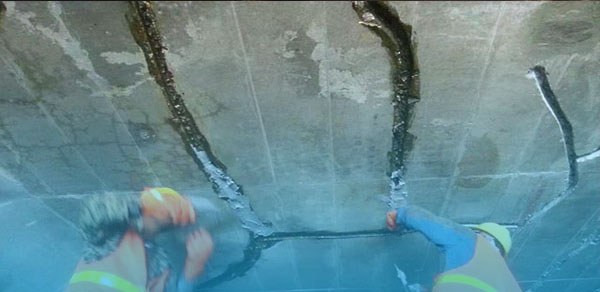
Our repair starts with full leak mapping of the structure. Active joint and crack leaks are stopped and injected using the same proven grout systems as other underground works — AS grout, high-strength specialty grout and specialty epoxy resin — selected for the pressure and movement at each defect.
Where air-tightness is required, joints, door-frame surrounds and penetrations receive continuous sealing: the void behind embedded frames is filled by injection, duct and pipe glands are sealed with durable compounds, and surfaces are finished with waterproof coatings that keep the interior gas-tight as well as dry.
Protection and Durability
Civil defense structures must survive flooding, long periods without maintenance and, in some cases, radiation environments. Our epoxy protection systems shield concrete from aggressive water and chemical attack, while crystalline cementitious systems tolerate long dormant periods and re-activate whenever water appears. Solvent-free epoxy coatings are used where the facility is occupied, providing low-emission, odorless protection.
Renovation of Older Shelters
Many existing civil air-defense works now serve as underground markets, garages and utility spaces, and their original waterproofing has deteriorated. We carry out negative-side restoration without changing the protective structure: hollow plaster and failed repairs are removed, leaks are injected and sealed, and the surface is prepared for the peacetime fit-out while preserving the wartime protective function.