Substrate Preparation
Oil, dust and similar contamination must be cleaned from the substrate and washed away with water. Hollow, powdery or loose areas must be removed and made good with 1:3 cement mortar. Smooth surfaces should be roughened with a chisel. Immediately before application the substrate must be thoroughly wetted; otherwise the coating will delaminate after drying.
Mixing
Mix Waterproof Master with water at a ratio of 0.3 to 0.4 (standard 0.35), adjusting the water content to the application: a thinner mix for brush work, a stiffer mix for trowel application and a drier mix for plugging. For elastic waterproofing combined with polymer, the powder-to-emulsion ratio must be strictly 1:1.5.
Mix preferably with an electric mixer until the mortar becomes glossy (usually 2 to 3 minutes); if mixed by hand, stir rapidly until the gloss appears (in summer, do not mix for more than 3 minutes). The mixed material must be used within half an hour, and faster in summer. For plugging, hand mixing is sufficient; the material is best kneaded into a ball rather than mixed too wet.
Application
Coating waterproofing generally requires two or three coats. After the first coat is touch-dry — not sticky and leaving no fingerprint — the next coat can be applied. When the final coat is touch-dry, begin water-spray curing immediately so that the treated layer remains damp for the first day; if it dries too quickly, use measures such as ponding for curing, otherwise coating performance will be seriously affected.
For plugging, the leak point is routed into an inverted dovetail groove or hole 1.5 to 5 cm deep (narrow at the opening, wider inside). The surrounding walls must be sound and clean. A fairly dry ball of mixed material is held in the hand; the moment it feels warm it is pressed into the opening and held for 5 to 10 minutes. For severe leakage, conduct the water first, add accelerator if necessary, and compact firmly.
For elastic waterproofing (the two-component powder-plus-emulsion system), brush the mixed material onto the substrate and apply the second coat only after the first is fully dry. Each coat should be thin, applied in alternating directions, until the coating is about 2 mm thick; material consumption is roughly 3 kg.
Performance Specifications
Tested in accordance with JC 900-2002, all inspected items pass: initial setting at 20 minutes (requirement not less than 10), final setting at 72 minutes (requirement not more than 360); 3-day net-paste flexural strength 5 MPa (requirement not less than 3.0) and compressive strength 23 MPa (requirement not less than 13.0); 7-day impermeability pressure 0.6 MPa for the coating and over 1.5 MPa for mortar; 7-day bond strength 1.5 MPa. No cracking, peeling or flaking occurs after freeze-thaw cycling between -15 C and +20 C, after 500 hours in calcium hydroxide, or after high- and low-temperature exposure.
Scope and Notes
Suitable for floors, roofs, walls, kitchens, bathrooms and toilets, civil air-defense works, metro and tunnels, water tanks, aquaculture pools, sealed sewage structures, tile bonding and wall joint pointing in both new and existing buildings.
- Do not combine Waterproof Master with cement, gypsum or lime.
- Not suitable for asphalt, plastic or excessively smooth surfaces.
- Do not apply in strong sunlight, in rain, or below -5 C; outside this range contact the manufacturer.
- When mixed with fine sand, the Waterproof Master-to-sand ratio should not exceed 1:2.5 and the waterproof layer needs mortar protection.
- Store sealed in a dry place against moisture; shelf life is one year.
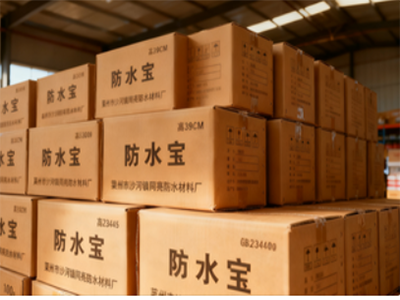
Standard export packing is moisture-proof woven bags lined with plastic film at a net weight of 25 +/- 1 kg per bag. The product is guaranteed for one year under normal storage; after that period it must be re-tested and may be used only if it passes.